Martha Stewart’s Guide to Designing an Ideal Deck
Martha Stewart writes her guide to designing a deck so you can bring your own deck vision to life.
For the past couple months, I’ve been working with the wonderful team at Trex to design a spectacular outdoor deck on my Maple Avenue House in Bedford, New York. The renovated 1970s ranch-style guesthouse is where many of my television, book, and magazine shoots take place and where I host many of my overnight visitors on my farm. It is one of several structures the original owner built for his growing family. The layout was very nice, but it lacked a proper place for outdoor entertaining—so I decided to fix that!
Have a Clear Vision
When I started planning my deck, I asked myself how I envisioned the space and how I wanted to use it. I knew I wanted the deck to feel connected to the home’s architecture, the surrounding landscape, and the way I live. I pictured reading scripts and writing in one comfortable corner; my grandchildren, Jude and Truman, and their friends running between the deck, pool, and tennis courts; and hosting many lovely lunches and dinners with friends, looking out at my beautiful rose gardens.
Planning around realistic habits helps you choose the right footprint from the start and prevents the space from feeling cramped or underused. A deck designed for entertaining will have different requirements than one focused strictly on relaxing. Consider these following questions:
- Will the deck be used mostly for dining, relaxing, or entertaining?
- Gather inspiration early—pull ideas from deck projects, outdoor rooms, gardens, railing styles, and furniture.
- How many people should the space comfortably fit on a regular basis?
- Does there need to be room for a grill, an outdoor sofa, planters, a dining table?
- How would people move through the space?
- Where will people gather?
- Would shade, storage, or privacy make the space more useful?
Balancing Beauty and Function
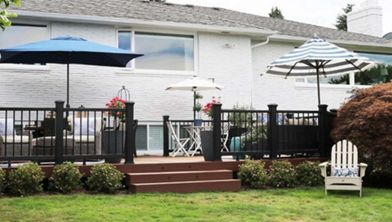
Design isn’t accidental—it’s absolutely intentional, and that should show in every detail. One of the smartest moves is to treat your deck as an outdoor room. Rather than leaving it as one open platform, divide it into zones with a clear purpose for each area, such as cooking, dining, or relaxing. From The Maple Avenue House kitchen, I can walk out onto a generous dining area, with the grill placed off to the side. Planters flank the door for a warm, welcoming feel, and a pergola overhead provides just enough shade. Another area is more private, where I can sit under a magnificent mature tree with a cappuccino.
Creating distinct areas gives the deck a polished, purposeful feel and improves traffic flow, especially when many people are using it at once. Good outdoor design is really about hospitality: I considered where people would gather, how they would move, and what would make conversation, shade, and comfort feel effortless. Keep these points in mind for your outdoor space:
- Keep the path from the back door to steps or seating clear and easy to navigate.
- Group furniture by function so dining and conversation areas feel distinct.
- Use built-in benches, planters, or a change in level to define separate zones.
- Leave enough open floor space so the deck feels comfortable, not crowded.
Design isn’t accidental—it’s absolutely intentional, and that should show in every detail.
How to Choose the Best Decking Materials
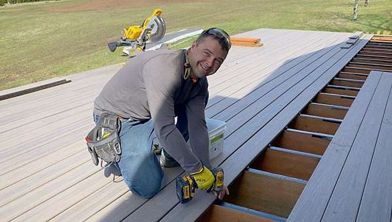
Material choice affects more than just appearance; it also shapes maintenance, longevity, and overall cost. I’ve designed many spaces with traditional wood over the years, and while I absolutely love its warmth and character, wood requires a great deal of upkeep: sanding, staining or painting, sealing, and then doing it all over again a few years later. For this project, I opted for composite decking, specifically Trex Transcend® Lineage® decking in Salt Flat, for its elevated faux-bois look that captures the knots, grains, and textures of real wood—without all the maintenance. I would much rather spend my time in the garden, cooking, or entertaining than maintaining my outdoor spaces. When choosing materials, be realistic about both your budget and the level of maintenance you are willing to take on:
- Pressure-treated wood: Affordable and widely available, but it typically needs regular cleaning, sealing, or staining to keep it looking its best.
- Composite decking: A popular choice for its durability, sustainability, low upkeep, and wood-look finishes. It generally costs more upfront but can save time and maintenance over the long run.
- PVC decking: Lightweight and highly moisture-resistant, making it appealing in damp climates or for homeowners who want minimal upkeep.
Outdoor Deck Features That Make a Space Unique
The most successful, welcoming decks are the ones people want to use every day. That means thinking beyond the surface boards: railing, stair lighting, furniture, and custom details—all these elements really work very nicely together to create an entire full experience. And be sure to prioritize safety!
I collaborated with the Trex team to choose beautiful safety features like Trex Select® Aluminum Railing in Burnished Bronze and lights so people don’t trip down the stairs at night. I was so pleased when I saw the deck at dusk—the lighting creates a completely different atmosphere after sunset. I also incorporated a privacy screen and a custom Trex® Pergola that supports climbing vines while providing welcome shade.
A defining feature of my deck is a beautiful mature crabapple tree, which I was determined to preserve. Rather than remove it, we designed the deck to wind gracefully around the trunk, making the magnificent tree an integral part of the space. When choosing elements to make your outdoor space uniquely yours, consider the following:
- Consider warm neutrals, natural wood-inspired textures, clean railing lines, and layered zones that make the outdoor space feel more like a furnished room.
- Add shade with a pergola, umbrella, or nearby landscaping if the deck gets strong sun.
- Consider weather-friendly seating, a rug, planters, a fire feature to instantly make the deck more welcoming.
- Choose railings that suit your style but still preserve sightlines and security.
- Check local building requirements early if your deck includes structural changes, new railings, or electrical additions.
Hiring a Pro
Decking is a long-term investment and should look and perform well for many, many years. Projects like these require proper planning, expertise, and the right team. I worked very closely with experienced TrexPro® Builders through the entire process. We collaborated on the design and discussed every detail: Their craftsmanship and their attention to detail helped bring the vision to life exactly as I intended. Good design is extremely important, but great execution is what makes the project ultimately successful—and we had great contractors, NJ Decks and Outdoor Living, who were so pleasant. I stopped by every single day, sometimes twice, just to check on the progress. (You can find a TrexPro® contractor using Trex’s online Find a Builder tool.)
Your Deck Design Checklist Before You Build:
- The first step is to define your deck’s main purpose.
- Create zones for the activities you care about most.
- Compare materials based on upkeep, durability, and budget.
- Plan for lighting, shade, and safety from the beginning.
- Choose finishing touches that feel like an extension of your home.
- For inspiration, planning resources, color selection, and builder support, log onto Trex.com.
- Check local permit and code requirements before building.
Designing the ideal deck begins with understanding how you want to live outdoors. Whether you’re envisioning a quiet morning cappuccino spot or a fabulous entertaining area, a well-designed deck should make your backyard feel like a natural extension of your home. Every decision I made started with function: where everyone would sit, how people would move through the space, what views I wanted to frame, and how the deck could make everyday life at the farm more enjoyable. A successful space should feel beautiful, useful, and connected to the home and landscape around it. By starting with a clear vision, planning thoughtful zones, choosing durable materials, adding details that improve comfort and safety, and working with skilled professionals like TrexPro® Builders, you can create an outdoor deck like me. I’m so pleased with my Bedford deck that I’m working with Trex on another project—on Skylands, my home in Seal Harbor, Maine. Be sure to check it out!
Get a free sample and see how Trex can transform your outdoor space, like it did for Martha Stewart.

This content was partially or fully generated by AI and has been reviewed by our team to ensure accuracy and relevance.


Copyright © 2026 Trex Company, Inc. All rights reserved.
Photos and videos © 2026 Warner Bros. Discovery, Inc. or its subsidiaries and affiliates. All trademarks are the property of their respective owners. All rights reserved.
- Country
-
Australia
-
Austria
-
Bahrain
-
Brazil
-
Canada English
-
-
Chile
-
Colombia
-
Costa Rica
-
Cyprus
-
Czech Republic
-
Fiji
-
France
-
Germany
-
India
-
Ireland
-
Israel
-
Kuwait
-
Lithuania
-
Mexico
-
Netherlands
-
New Zealand
-
Norway
-
Oman
-
Qatar
-
Saudi Arabia
-
South Africa
-
Spain
-
Sweden
-
Switzerland
-
Turkey
-
United Arab Emirates
-
United Kingdom
-
United States
-
Venezuela
By choosing your country, you acknowledge that you have read Trex's Privacy Policy


